Table Of Content
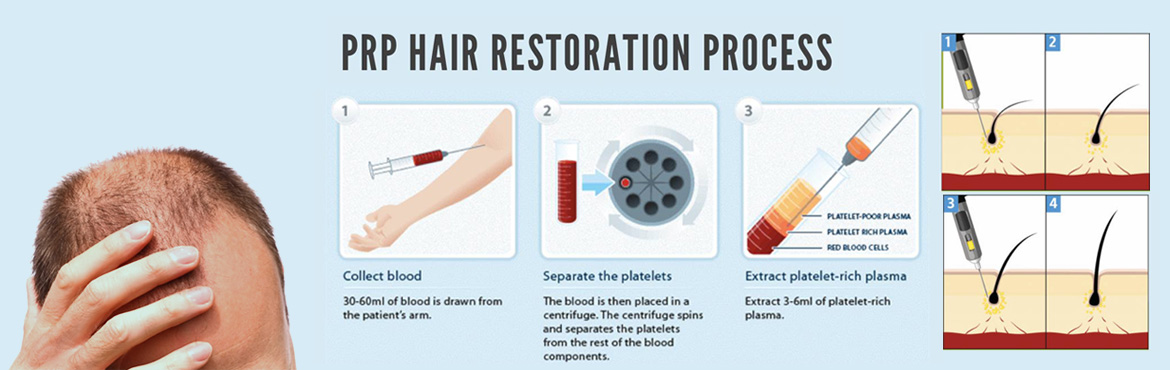
PRP therapy is a treatment for hair loss that may help promote and maintain hair growth. Platelet-Rich Plasma (PRP) Hair Restoration is one of today's most advanced, natural hair restoration treatments available, with a proven track record for providing patient satisfaction and results. Patience is key; it may take several sessions and at least three months to see improvement. To learn if you’re a good candidate for Plasma therapy for hair loss, contact your Advanced Dermatology and Cosmetic Surgery providers. According to Hamilton classification of male pattern baldness, 4 patients were in grade 2, 4 patients were in grade 3 and 3 patients were in grade 4 androgenic alopecia.
Alopecia Areata

Research suggests that injecting areas of inflammation or tissue damage with high concentrations of platelets can encourage new tissue growth and promote overall cellular healing. However, objective methods allowing to perform quantitative evaluation of hair growth are required for clinical studies. The global photographic assessment is a semi-objective tool commonly used in clinical studies, evaluated by experts blinded to treatment and time [33].
Which Hair Growth Products Are Worth Using? - Health Hive
Which Hair Growth Products Are Worth Using?.
Posted: Wed, 21 Feb 2024 08:00:00 GMT [source]
About the Authors
The injection schedule will depend on your genetics, pattern and amount of hair loss, age and hormones. PRP therapy is a medical treatment that could be part of your hair loss treatment plan. Other options may include medications like Rogaine and Propecia, along with hair transplant surgery. Talk to a healthcare provider, such as a dermatologist, to discuss PRP therapy and other hair loss treatments.
Platelet Rich Plasma (PRP) for Hair Restoration - WFLA
Platelet Rich Plasma (PRP) for Hair Restoration.
Posted: Wed, 02 Aug 2023 07:00:00 GMT [source]
What Are the Different Types of Alopecia Areata?
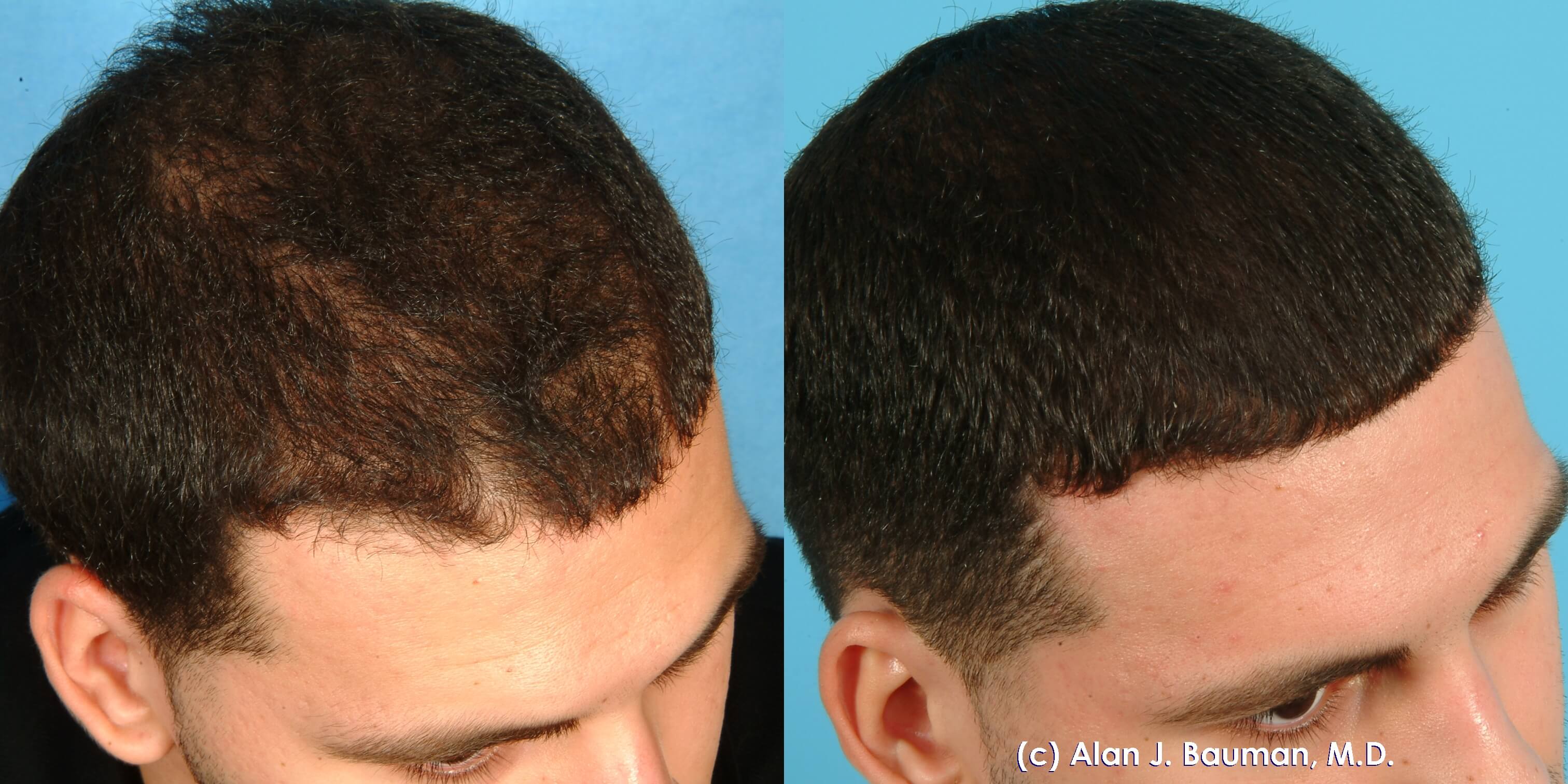
Mild side effects such as transient edema, itching, tenderness, and transient bleeding at the points of injections were observed in a fraction of subjects. The dermal papilla of the pilosebaceous unit is able to synthesize and metabolize a wide range of androgens, with subsequent alteration of soluble factors regulating the growth and activity of hair follicles keratinocytes [12,13]. PRP for hair loss is generally safe, as it uses the patient's own blood products and injects them back into the same person. Potential side effects are pain, infection, soft tissue injury, bruising and bleeding. A PRP injections for hair loss procedure can cost anywhere from $400 to $3,500. The actual cost of a PRP injections for hair loss is dependent upon location, hair loss specialist, and length and involvement of the cosmetic procedure.
Patients
The lack of standardized preparation and technique resulting in high heterogeneity of composition, concentration, dosage, depth, and site of injections make it difficult to compare results. Although a benign condition, hair loss in FAGA may have a significant psychosocial impact, resulting in reduced health-related quality of life (HrQoL) and anxiety and depression in women with FAGA [26,27]. Although Ludwig assumed that FAGA and MAGA represented the same androgen-dependant condition with different clinical presentations between sexes, this has been widely questioned later on [22]. Many authors have argued that in spite of identical histopathology, FAGA and MAGA are two separate entities characterized by different peak ages of onset, rates of prevalence, and patterning of hair loss.
The medical professional will then extract this plasma and prepare it for administration. To prepare a PRP injection, a medical professional will take a sample of a person’s blood. This device then spins at such a high speed that the blood sample separates into component parts, one of which is PRP.
Several studies have shown that PRP can be used effectively for treatment of hair loss. Although it has been widely used, the exact mechanism of action of PRP is still not fully elucidated. In this article, we aim to review and update current information on the definition, classification, mechanism of action, clinical efficacy in hair regrowth, and adverse events of PRP. PRP injections are a minimally invasive, non-surgical hair restoration procedure providing an effective treatment for female pattern hair loss, male pattern baldness, and hair thinning. This hair loss treatment promotes natural hair growth by rejuvenating hair follicles and encouraging healthy, new hair growth. Platelet-rich plasma (PRP) therapy for hair loss is a minimally invasive treatment that uses a person’s own blood to promote hair growth.
Platelets and hair growth: What’s the connection?
However, an emerging treatment called PRP, or platelet rich plasma for hair loss, works differently to stimulate hair regrowth. Platelet Rich Plasma, also known as PRP, is a relatively new addition to the list of hair loss treatments. The theory is this that platelets store growth factors to help stimulate wound healing and tissue growth where it is needed. If you take a patient’s own platelets and re-inject them into an area that needs healing and growth, the body’s own mechanisms will improve the regeneration of the tissue.
What are platelet-rich plasma (PRP) injections for hair loss?
According to the authors, most of the studies found that injections of PRP reduced hair loss and increased the diameter of hairs and the density of hair growth. PRP contains a range of growth factors and proteins that speed tissue repair. As some types of hair loss result from damage to hair follicles, researchers initially hypothesized that PRP could help regrow hair by reversing the process that occurs in androgenetic alopecia. In spite of its promising potential, PRP is not yet included in guidelines for the treatment of FAGA, being performed mostly in a private-practice setting, with considerable financial, emotional, and time investment from the patient. Given their low cost and the favorable safety and efficacy profile, approved drugs for the treatment of FAGA should always be proposed as a first line of therapy in eligible patients. PRP could also represent an additional therapeutic option offered in a combination with topical or oral drugs.
And, there are virtually no side effects from PRP, except for a mild feeling of pressure at the injection site, says dermatologist Shilpi Khetarpal, MD. About 50 million American men and 30 million women have male- or female-pattern baldness. It can begin early in life, but is much more common after the age of 50, when more than 50% of men will experience some kind of hair loss. The doctor’s recommendations for how often a person should have PRP will vary depending on a person’s condition and the results of their initial treatment.
Based on our review of the published studies, we suggest PRP preparation by a single spin centrifugation method to produce pure PRP with a platelet enrichment of 3 to 6 times the mean concentration of whole blood and minimize granulocytes. Addition of an activator before administration may be beneficial in growth-factor release because most positive studies included one, such as calcium chloride or calcium gluconate. We recommend the administration of PRP as subdermal depo bolus injections because this is less painful and an overall more efficient injection technique. Subdermal depo bolus injections allow for the diffusion of PRP and result in fewer injections.




No comments:
Post a Comment